-
A-A+
- Українською
- العربية
- Українською
- العربية
- Old version
English
English
On 21 November 2021 Ukraine celebrates the Day of Dignity and Freedom!
21 November 2021 09:49
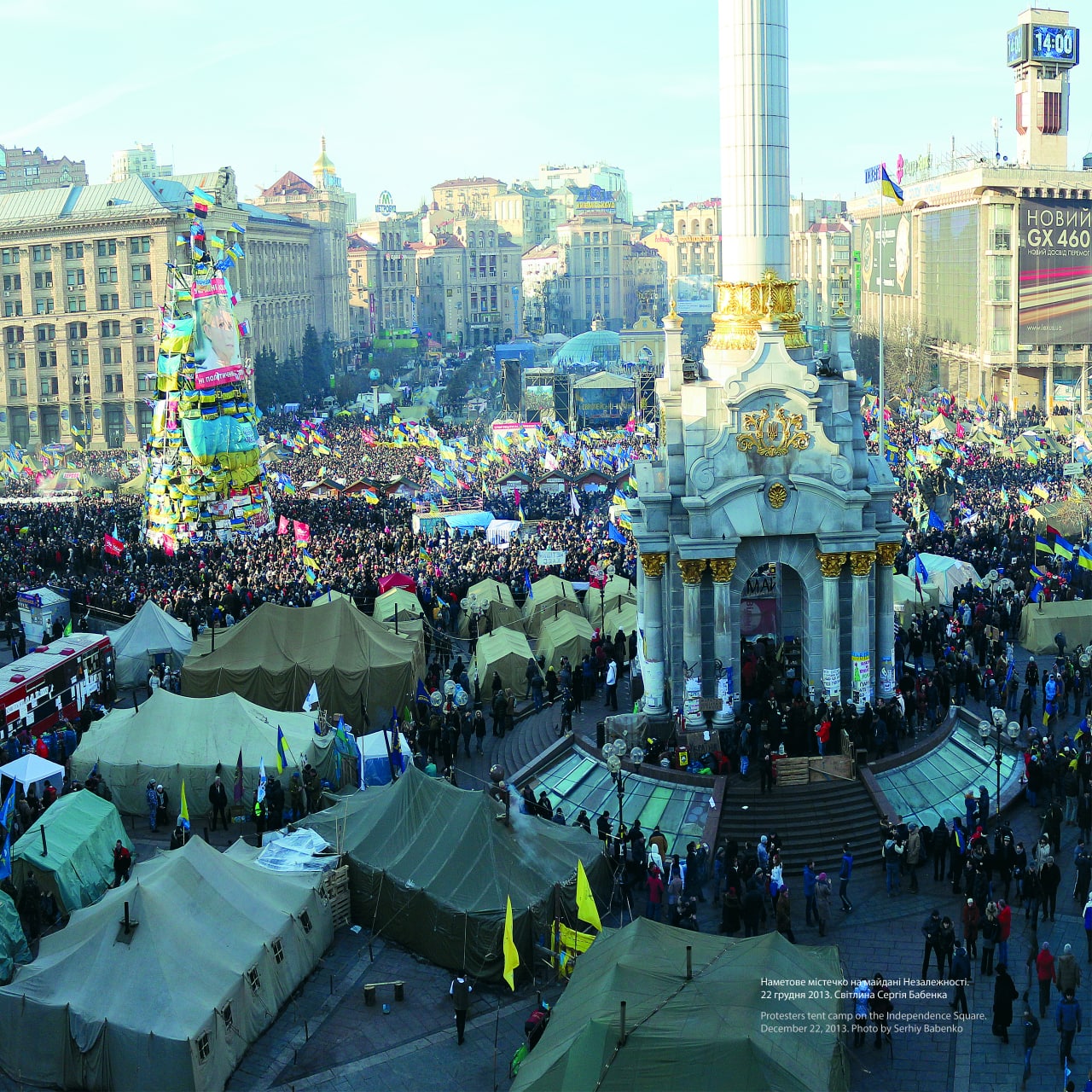
In the evening of the 21st November 2013, about fifteen hundred people gathered at the center of Kyiv to protest. Viktor Yanukovych, the pro-Russian President of Ukraine at the time, refused to sign the Association Agreement between Ukraine and the EU – the document, for which our country was striving for many years. The protesters understood all the dangers and implications of such an action by the authorities, and called upon the people of Ukraine to support them. Meanwhile, an open-ended protest was announced, and the campaigners stayed overnight at the Independence Square. Because of the slogans of European integration, the protest was named Euromaidan.
Maidan is a Ukrainian way to stand for personal and public freedoms, human rights, national values, sovereignty and independence of the state in response to the arbitrariness and despotism of the authorities.
For the last thirty years, the main civil movements were located around the Independence square at the center of Kyiv. Intellectually, those movements stressed the idea of personal and collective freedom of choice as a basic value.
However, the notion of Maidan has long ago expanded beyond the boundaries of the square at the heart of our state. No longer a territory, now it is an idea and a history of the mass protest against the arbitrariness of the authorities. Unlike other numerous protests, Maidans are nationwide nonpartisan movements represented by the regional units, which propagate the principles of democratic coordination, activism, volunteering and social responsibility.